Push for charges in Jayco cats’ death case

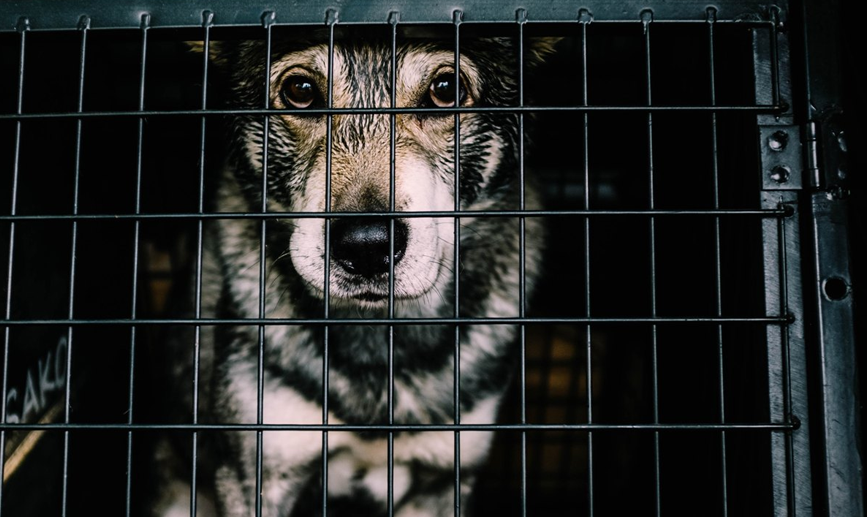
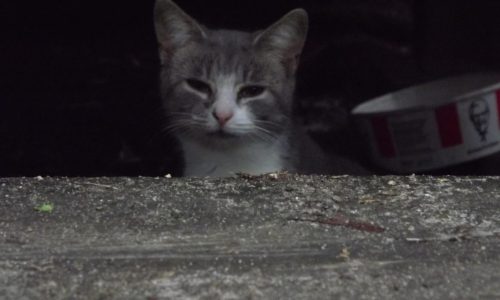
ELKHART COUNTY, Ind. — The push for justice in the case of two stray cats, killed inside a trash compactor, at the hands of three former Jayco employees in Elkhart County. A new petition is being circulated by a group called ‘Animal Victory’, reaching more than 19,000 signatures, calling for the criminal case to be reopened and charges filed against the men responsible, after the County Prosecutor Vicki Becker announced her office would not prosecute the men. Becker arguing the feral cats damaged business property and didn’t endure prolonged suffering. Organizers of the petition sending a letter to Becker reading in part quote, “Your failure to address this case in a fair and legal manner is a moral failing, not just a legal one. There is more than enough evidence that shows you are wrong.” ABC57 reached out to Becker about the petition, to which she responded with, “Although I have not personally seen the petition, I am aware of its existence. Even with such a petition, I am not willing to act contrary to the law simply because it may be the popular thing to do.” ABC57 will continue to keep you updated on any new developments.

Shelters in North Carolina provide temporary refuge for abandoned pets as demand rises

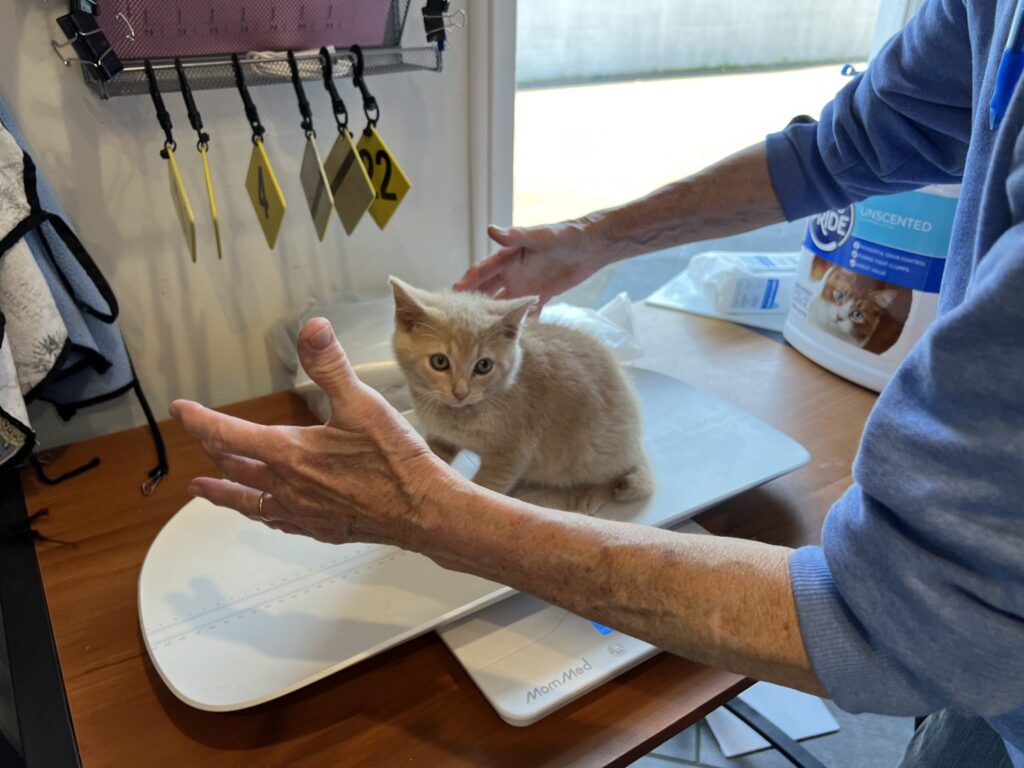
Buffy, a 3-month-old kitten, is being weighed by Mary Dow, director and volunteer at the Independent Animal Rescue clinic in Durham. (Photo by Danelis Olivera-Herrera.) Wednesday, May 1, 2024 By Danelis Olivera-Herrera Animals surrendered to animal control or abandoned often face fending for themselves on the streets or death. North Carolina is one of many states where the demand for animal rescue exceeds available fostering and adoption resources, particularly in the Triangle, Wilmington, Winston-Salem and Charlotte areas. Various shelters and sanctuaries in North Carolina offer temporary refuge for abandoned pets until they can be adopted, serving just about every type of animal from the usual household pets like cats and dogs, to pigs and goats. Independent Animal Rescue, Durham Independent Animal Rescue (IAR), one of the older nonprofit animal rescues in the Triangle area, is located in Durham and was founded in 1994. The organization is a foster-based rescue that was historically staffed by volunteers but recently was able to hire paid staff. Lex Tamvakis is among those paid staff members, serving as fundraising and communications manager. “We’ve already brought in, I think, more dogs in the past three months than we did for the first three months of the year last year,” Tamvakis said. “We’re seeing an increase in requests from owners who have to surrender their animals for different reasons that are requesting that we can intake them.” IAR currently has under its care 205 animals – 160 cats and 45 dogs – but some of them are not available for adoption until various health issues are addressed. IAR also holds cat clinics every other Sunday for feral cats or those found roaming a neighborhood. Like many nonprofits, IAR seeks the support of the community in many ways, not just those wanting to adopt a pet. “We take some things that maybe are not as common today in animal rescue. We are always in need of old hand towels or bath towels that we use for animals to recover after surgery.” Tamvakis said. Animal City Haven, Charlotte Animal City Haven (ACH) in Charlotte, a foster-based rescue that is also run by volunteers, is not your typical shelter. It cares for animals whose owners have died and don’t have family who can adopt their pets. People with pets and nobody to pass them along to, can make arrangements with ACH in advance. Also, if ACH board members learn about animals who have gone to other shelters for this reason, they will take in those animals, too. “We offer security to pet parents to ensure that their pet will not go to animal control if something should happen to them,” said Leah Henrichsen, founder and president of ACH. Henrichsen came up with the idea for the organization as she herself doesn’t have family in the area. “And if something happens to me, all of my pets would go to animal control because there is no other option,” Henrichsen said. “There was nobody like us that said, ‘Hey, it’s OK, we’ll protect them, we’ll find them a home’” People who contact ACH ahead of time are asked about their plans for the pet’s future, whether they have godparents for the pet or want it re-homed, and if they have multiple pets that should be kept together. “We create a forever care plan for each pet, sort of telling us, Animal City, what to do in the case of an emergency,” Henrichsen said. The nonprofit has a small board, and it’s the members of the board along with a few volunteers who care for most of the animals until they can be placed. This limits how many animals the group can help. “We are pretty limited with how many of those kinds of pets that we can help because we don’t have all the money in the world to do that,” Henrichsen said. “But how we do it is through our foster care program, and that is the only way we can do this work—through people saying, ‘Yeah, I’ll take that pet into my house and house that pet until they are adopted out.’” According to Henrichsen, donations are not a dependable source of income. While always welcomed, they are not sustainable, and the organization has faced challenges reaching a wider audience. Chihuahua Rescue and Transport This is also true for Chihuahua Rescue and Transport (CRT), whose mission is to rescue Chihuahuas and Chihuahua mixes throughout three regions in the United States — Midwest, Southeast and Southwest — since 1996. “We used to do really well on, like, T-shirt fundraisers. We did calendars with our past dogs and did really well within the last two to three years, but those fundraisers are just nothing like they used to be in our in-person events,” said Scott Frye, board member and president of CRT. “They’re [people] very, and with good reason, are really cautious with their money. Our donations are way down big time, so it’s taken a financial hit and we’ve had to really, the last couple of months, step back.” CRT currently has 80 dogs in foster homes, with 21 of them being considered for hospice care because of their age or general physical condition. Eva Cushman, a CRT volunteer, is the “queen” of hospice sanctuary, according to Frye. Although not part of her volunteer duties, Cushman stays in touch with the adoptees and even dog sits the beloved pets when their owners are out of town. “Every single one of them, of those dogs has a piece of my heart, and they have in some way changed me. As long as I’m breathing, I will keep helping them and taking them,” Cushman said. Cushman said she’s a “Chihuahua girl at heart” and has been throughout her life, but some days, the constant presence of death weighs on her. During Hurricane Florence, a CRT foster home was severely impacted, and the foster parent and her neighbor had to wait for the Cajun Navy Relief to rescue them from heavy flooding. “We… Continue reading Shelters in North Carolina provide temporary refuge for abandoned pets as demand rises

Audio Interview With Nancy Pearlman 1. How I got started 2. The Funding Problem 3.Why people abuse animals. 4. The solution

How Animal Victory is changing the face of animal welfare one signature at a time

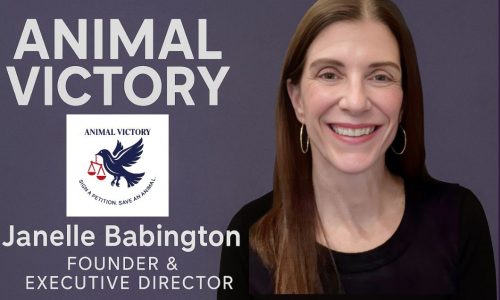
Signatures to Date 150K Raised in Donations $25K+ New Subscribers Per Month 10K 2019: In their 15+ years fighting for the humane treatment of animals, animal welfare advocates Janelle Babington and Penny Eims had seen it all—from farm animals living in horrendous circumstances to household pets being neglected and abused. In her experience, Babington says, the issue of animal abuse is commonly overlooked or cast aside, rarely receiving attention over other seemingly more pressing causes. But the irony, she claims, is in how much we as a society value animals, given that well over half of the households in the U.S. own a pet, and many treat them as well-loved members of the family. The root of the problem, it appeared, was in how officials react to and punish perpetrators of animal abuse––ultimately allowing it tocontinue with little to no consequence. Babington and Eims knew they had to prove to major decision-makers that animal welfare is a cause desperately in need of change and they would need more voices in the mix to do so. In early 2019, the two decided to combine their unique skill sets to tackle the issue head on through online petitions. Armed withBabington’s background in nonprofit management and Eims’ powerful storytelling from years of reporting on animal-related news, they set out to create a petition site––AnimalVictory.org. Once the site was up, its main purpose would be to collect high volumes of signatures for individual petitions related to specific cases of animal abuse, which they would then present to the authorities or judge working the case in an effort to have the laws updated to reflect more severe penalties, and ensure the perpetrator is held accountable to thefullest extent of the law. “Right now 46/50 states have enacted felonies for first-time animal abusers, but a lot of the time they still get away with a slap on the wrist because it saves [state government] resources…but [the law] doesn’t mean anything if it’s not enforced.” After an attempt to set up their site on a DIY web development platform quickly proved ineffective, Babington turned to Google for other options and stumbled upon NationBuilder. “I thought, ‘Oh my gosh, this is what we’re looking to do; these people have it all! They have everything we need for a custom website,’” she reflected. With part of the web design work completed on their previous site, they chose to work with a NationBuilder design partner to migrate that work over to NationBuilder––and in April of 2019, AnimalVictory.org went live. On their new site, they were able to implement powerful action pages, including both petition pages and corresponding donation pages, and track activity from supporters via recruiter IDs. While other petition sites tend to bundle animal welfare with other causes, Babington says she and Eims have dedicated their website exclusively to petitioning for the fair treatment of animals. “Animals are at the bottom of the list when it comes to charitable dollars. There’s about 400 billion given annually in the U.S. andanimals and the environment only receive a combined 3% of those funds… If you have around 30,000 animal rescue organizationsutilizing those funds––that’s not a whole lot of money.” With the site now live, the two leaders have been hard at work developing and deploying their digital strategy with one main goal in mind: collecting as many signatures as possible. Through Facebook ads and weekly newsletters, they’re working on building up their audience––and in the first six months since launch, they’ve collected an estimated 150,000 signatures via 48 petitions. But their work doesn’t stop at signatures––they’ve made it a priority to keep supporters in the loop every step of the way. As they send signatures and correspondence out to prosecuting attorneys, judges, police departments, and other major decision-makers, they also post updates on their Facebook page and regularly make announcements in their newsletters. Along with the strong relationships they’re building with supporters, they also give back to their community by donating 100% of their net profits to animal welfare organizations and campaigns, as well as individuals who have been impacted by animal abuse. While AnimalVictory.org has had an incredible start and seen quick growth in signatures over a short period of time, there’s still much more work to be done. But with the digital infrastructure for reaching their supporters in place, and a powerful commitment to fighting for their cause––Babington and Eims aren’t standing down anytime soon. “Animals…we love them, we all have them, but people close their eyes to the abuse. And we can understand a lot of that, but that’s why we’re here. We’re not closing our eyes.”

Animal Victory Disaster & Abuse Fund

1319 Military Cutoff Road
Unit 101 Suite CC
Wilmington, NC 28403

Copyright © 2026 AnimalVictory.org. All Rights Reserved.

Animal Victory Disaster & Abuse Fund is a registered 501 (c) (3) non-profit organization. Donations for these projects are tax-deductible as authorized by law. EIN# 88-3617975

The primary mission of Animal Victory Disaster & Abuse Fund is to support and protect animals affected by cruelty, neglect, natural disasters, and emergency situations through rescue support, public education, and crisis response initiatives.