


The Problem: Animals Are at the Bottom of the List
Most people assume that with all the charitable giving in this country, animals must be well taken care of. They are not. In fact, animals don't even have their own category in national giving reports. According to Giving USA, the longest running and most comprehensive report on U.S. charitable giving, animals are lumped together with the environment into a single shared category called "Environment/Animals." And that shared category has been stuck at the very bottom of the list for years.
In 2017, Americans gave $410.02 billion to charity. Religion received 31%. Education received 14%. Human Services received 12%. Environment/Animals? Three percent. Just $11.83 billion, shared between two causes.
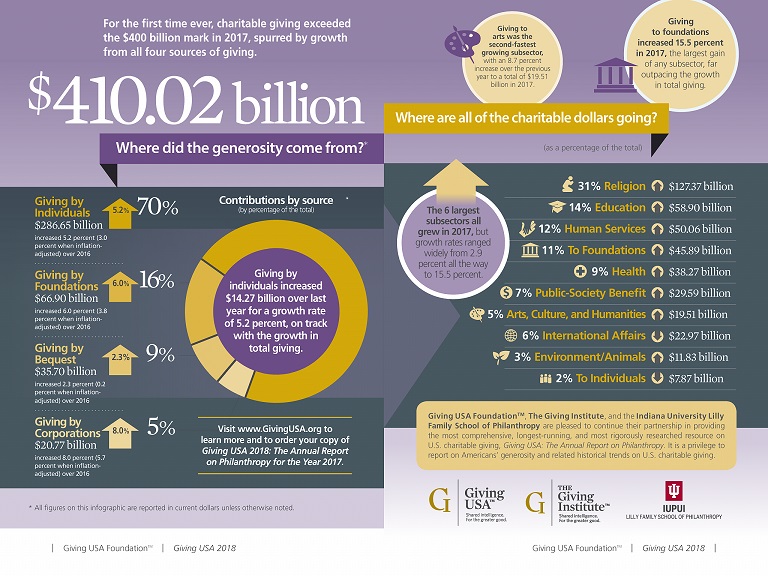
Source: Giving USA 2018 (reporting on 2017 giving)
Eight years later, in 2024, Americans gave $592.50 billion to charity. That is $182 billion more than 2017. Every category grew. Religion still receives 23%. Human Services still receives 14%. Education still receives 14%.
And Environment/Animals? Still 3%. Still sharing a category. Still at the bottom.
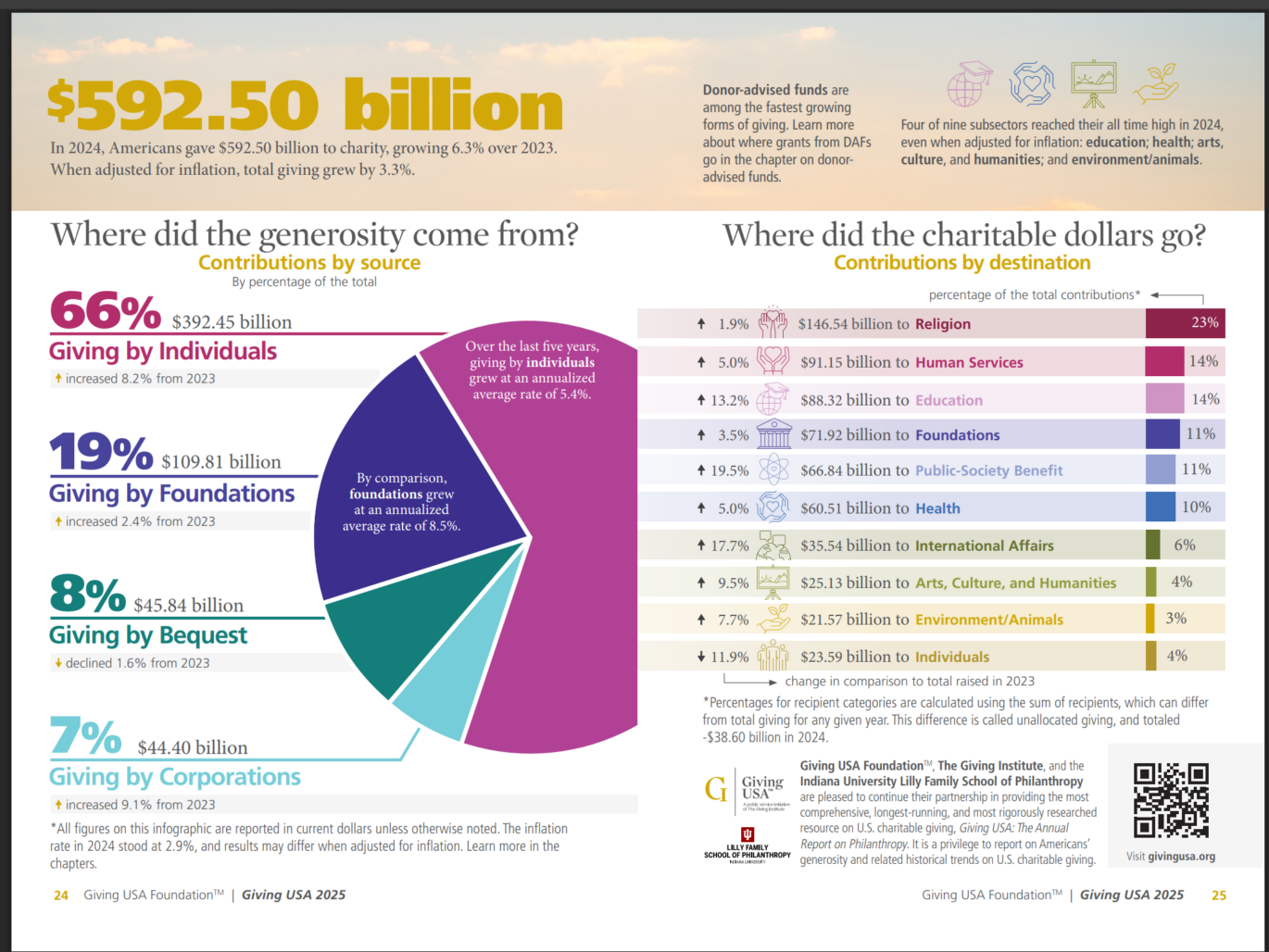
Source: Giving USA 2025 (reporting on 2024 giving)
In eight years, total charitable giving in this country grew by nearly $183 billion, and animals didn't gain a single percentage point. The dollar amount went from $11.83 billion to $21.57 billion, but the share of the pie has not moved.
Now here is where it gets worse. If you split that 3% category roughly 50/50 between environment and animals, animal causes receive about $10.8 billion. But roughly 87% of that goes to the top 1 to 5% of organizations, the national giants everyone recognizes: the ASPCAs, the Humane Societies, the large national groups with massive marketing budgets. That leaves approximately $1.4 billion for the remaining 25,000+ small animal rescues, shelters, and sanctuaries across the United States. That averages out to roughly $56,000 per organization per year.
Nobody can run a rescue on $56,000 a year. It is why so many are drowning, struggling, or closing their doors entirely.
These are the organizations doing the hardest work: pulling animals from cruelty cases, responding to disasters, treating the sick and abandoned, and saying yes to the ones nobody else wants. The compassion exists. The manpower exists. What does not exist is the bridge between donors who want to help and the small organizations that desperately need it.
When a disaster strikes, people want to help. They open their wallets. But the only names they know are the big ones: the Humane Society, the ASPCA, the national organizations with massive marketing budgets. So that's where the money goes. The problem is, those funds don't trickle down. The small rescues on the ground, the ones actually pulling animals out of floodwaters, setting up emergency shelters in their garages, driving through the night to transport animals to safety, they never see that money. They don't have a platform. They don't have a marketing team. They just have the work. That is exactly where we come in. We research. We know who these organizations are. We are familiar with the boots on the ground groups doing the actual rescuing within their communities. And we get the funds and supplies directly to them.
How We Solve It
Animal Victory Disaster and Abuse Fund is a 501(c)(3) nonprofit that builds that bridge. We operate six projects designed to protect animals in crisis and strengthen long-term protections.
Emergency Disaster Relief gets funding and supplies directly to small rescues during hurricanes, wildfires, and other emergencies. Begging For Help addresses community dog and cat overpopulation through TNR. Home Street Home supports the pets of unhoused individuals. The Animal Abuse Registry (PASS) is building the first national public database of convicted animal abusers. The Animal Court Podcast exposes hidden abuse cases weekly. And our Petitions affiliate mobilizes large-scale public pressure for accountability.
As of January 2026, we have distributed nearly $246,000 in funding and supplies and helped an estimated 8,200 animals based upon $30.00 per animal.